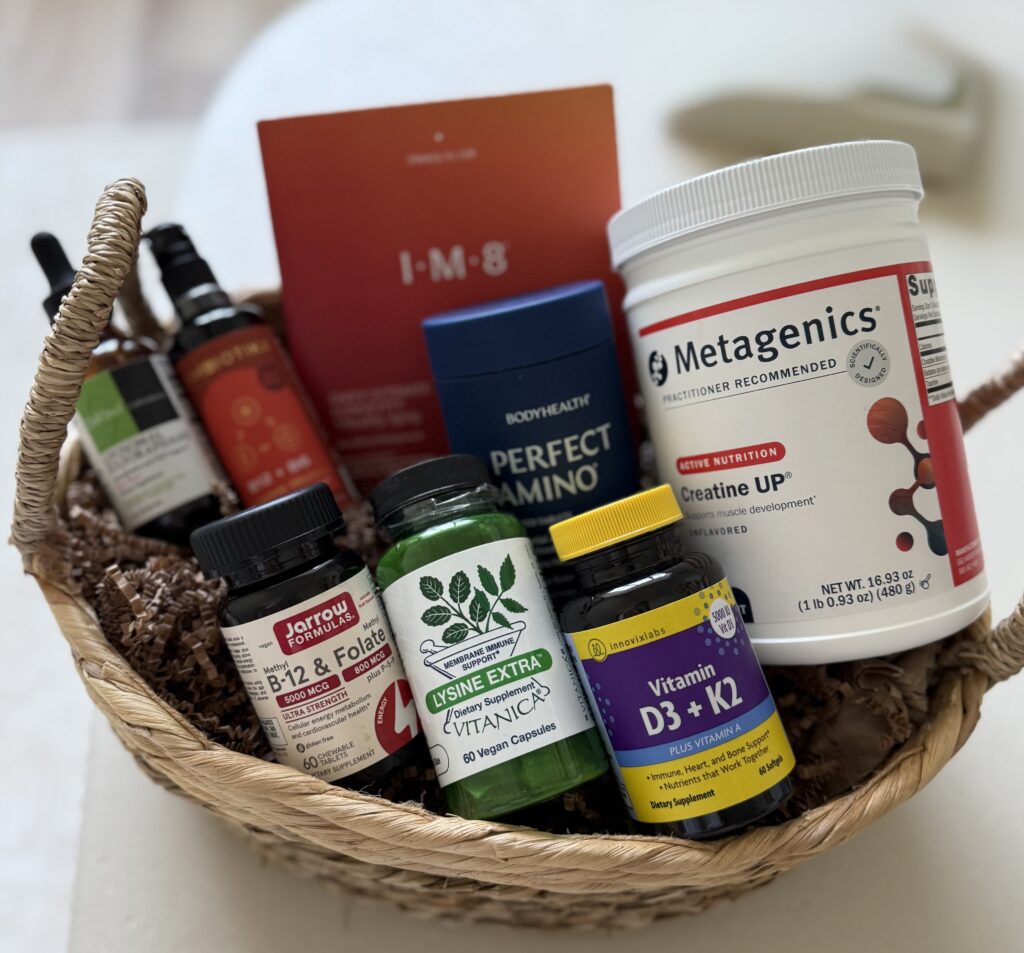
From who benefits, to what form to take, to what your labs are quietly telling you.
In an ideal world, every nutrient your body needs would arrive beautifully packaged in whole, vibrant food. And for many people, a thoughtfully varied diet covers a lot of ground. But here’s what years of clinical practice have shown me: specific people, at specific life stages, with specific health histories, genuinely need targeted nutritional support — and without it, they feel persistently off in ways that are hard to explain and easy to dismiss.
Supplementation, when it’s personalized and evidence-based, isn’t a wellness trend. It’s a precision tool.
| The question isn’t whether supplements are good or bad. It’s whether the right supplement, in the right form, is right for you. |
Who Genuinely Benefits?
Certain groups consistently have higher needs or reduced absorption that food alone can’t always fully address:
Plant-Based Eaters
Vegan and vegetarian diets are nutritionally generous in many ways — but B12, iron (non-heme, which is less bioavailable), zinc, calcium, and omega-3 DHA/EPA are common gaps. The good news: they’re measurable. A simple lab panel tells you exactly what you need to address and in what amount. Always pair plant-based iron sources with vitamin C to meaningfully enhance absorption.
People on Long-Term Medications
This is one of the most under-discussed areas in nutrition. Several common medications systematically deplete essential nutrients over time — and it rarely gets mentioned at the pharmacy window:
- PPIs (acid reducers like omeprazole) deplete B12, magnesium, and calcium
- Statins deplete CoQ10, which is critical for heart and muscle function
- Metformin depletes B12
- Diuretics pull potassium and magnesium
Patients on these medications often feel persistently “off” — fatigue, muscle aches, brain fog — without obvious lab flags. Targeted, bioavailable supplementation can be genuinely transformative when matched to the specific depletion.
Digestive Conditions
When the gut is compromised, absorption is compromised — regardless of diet quality. IBS, IBD, SIBO, celiac disease, and low stomach acid all impair how effectively your body extracts nutrients from food. Even the most nutrient-dense meal can fall short if the absorptive surface isn’t functioning well. In these cases, choosing highly bioavailable forms and supporting digestion directly (with digestive enzymes, targeted probiotics) matters enormously.
Older Adults & Post-Menopausal Women
Absorption efficiency naturally declines with age — even with a great diet. The stomach produces less acid, which is needed to absorb B12 and minerals. Skin synthesis of vitamin D decreases. Calcium, D3, K2, and magnesium are frequently both under-consumed and under-absorbed simultaneously in this population. This is also where proactive bone density screening becomes critical — bone loss accelerates significantly after menopause, and it’s far easier to build bone than to recover it.
Bariatric Surgery & GLP-1 Users
These individuals require intentional, ongoing nutritional planning — not as an afterthought, but as a core part of their care. Gastric bypass patients need lifelong supplementation for B12, iron, and calcium due to altered gut anatomy. GLP-1 users experience significantly reduced appetite, which creates real risk for protein deficiency, low fiber intake, and micronutrient gaps. Protein support, fiber, and electrolytes all require active management.
Prenatal, Nursing & Pediatric Stages
These are the highest-demand nutritional windows in a human life. Prenatal care requires methylfolate (not synthetic folic acid for those with MTHFR variants), iron, DHA, and choline — all critical for fetal development. Breastfeeding increases maternal nutrient demands significantly across the board. Children who are selective eaters are frequently low in iron, zinc, and vitamin D — deficiencies that affect growth, immunity, and cognitive development.
Stress, Sleep & Methylation
Chronic stress burns through magnesium and B vitamins faster than most people replenish them. For individuals with MTHFR gene variants — which impair the body’s ability to convert synthetic B vitamins into active forms — methylated versions (methylfolate, methyl-B12) are essential rather than optional. Magnesium glycinate or threonate supports sleep quality and nervous system relaxation in ways that few interventions match.
Delivery Form: More Than Just Convenience
How a supplement is delivered affects how much your body actually absorbs — sometimes dramatically. This matters especially for nutrients where deficiency is common and consequences are meaningful.
| Form | Best For | Key Consideration |
| Liquid | Children, elderly, or anyone with difficulty swallowing; fast absorption | Sensitive to light and heat; shorter shelf life once opened. Store carefully. |
| Capsule | Most adults; clean, precise dosing; widely available in clinical-grade forms | Check for veggie cellulose capsules if avoiding gelatin. Most reliable for dosing accuracy. |
| Gummies | Compliance and palatability, especially for those resistant to pills | Often contain less active nutrient than labeled dose; may include sugar, fillers. Always read the label. |
| Powder | Higher doses, blended formulas, those who prefer to mix into food or drinks | Degrades faster than capsules once opened. Buy only what you’ll use in 3–6 months. Storage matters. |
| Liposomal | Vitamin C, glutathione, B vitamins — where maximum absorption is the goal | True liposomal technology is meaningfully different from ‘nano’ marketing. Verify before purchasing. |
A Note on Liposomal Technology
Liposomal supplements encapsulate nutrients inside tiny fat-based spheres that mirror the structure of your cell membranes. This allows them to bypass degradation in the gut and absorb directly into the bloodstream — delivering significantly more active nutrient than standard forms. For vitamin C, glutathione, and certain B vitamins, this is a genuine and meaningful upgrade. That said, the word “liposomal” is increasingly used loosely in marketing — true phospholipid encapsulation requires specific manufacturing; look for brands that can verify this with third-party testing.
Quality, Grade & What to Look For
The supplement industry is largely self-regulated, which means quality varies more than most people realize. These are the factors that actually determine whether a supplement is worth taking:
Third-Party Certification
NSF, USP, and IFOS certification means an independent lab has verified that what’s on the label is in the product, in the stated amount, and free from heavy metals, contaminants, and banned substances. This is non-negotiable for clinical-quality supplementation.
Bioavailable Forms
The molecular form of a nutrient determines how much your body can actually use. Magnesium glycinate is meaningfully better absorbed than magnesium oxide. Methylfolate is the active form your cells can use directly, while synthetic folic acid requires conversion (which many people do inefficiently). Iron bisglycinate causes far less GI distress than ferrous sulfate while absorbing more effectively. These aren’t minor details — they’re the difference between a supplement that works and one that doesn’t.
Transparent Sourcing & Manufacturing
Look for GMP-certified facilities, clear country of origin for raw ingredients, and willingness to share Certificates of Analysis (COAs). Professional dispensary brands are generally held to higher standards than mass-market retail.
Storage & Freshness
Heat, humidity, and direct light degrade supplement potency — faster than most people expect. Many powders and liquids spend extended time in warehouse storage before reaching consumers. Buy sizes you’ll realistically use within 3–6 months of opening. Check whether your capsules or liquid formulas require refrigeration after opening. A supplement you can’t store properly isn’t serving you well.
Start Here: Get Your Bloodwork Done
Before spending a dollar on supplements, invest in understanding your baseline. Routine labs don’t just reveal deficiencies — they give you and your registered dietitian a precise map to build a targeted protocol that addresses your body’s actual needs.
I recommend asking your provider to run a comprehensive nutritional panel annually, alongside cardiovascular and inflammatory markers. High homocysteine, low omega-3 index, and elevated hs-CRP are all measurable, addressable contributors to cardiovascular risk — and all respond meaningfully to targeted nutrition and supplementation.
Bone density screening is equally worth pursuing proactively. Most people only test after a fracture. The better approach is to build your bone bank early and monitor it regularly.
Key markers to request:
- Vitamin D (25-OH) — the most commonly deficient nutrient in the US
- B12 and folate — with methylmalonic acid for functional B12 status
- Ferritin and full iron panel — ferritin is a more sensitive marker than hemoglobin alone
- RBC magnesium — significantly more accurate than standard serum magnesium
- Zinc
- Omega-3 index — reflects actual tissue omega-3 status, not just dietary intake
- hs-CRP — sensitive inflammatory marker linked to cardiovascular and metabolic risk
- Homocysteine — elevated levels indicate methylation issues and raise cardiovascular risk
- Full fasting lipid panel — LDL particle size and HDL function matter, not just totals
- Fasting insulin and glucose — early indicators of metabolic dysfunction
- DEXA scan for bone density — proactive, not just reactive
| Your labs are a roadmap. A registered dietitian can help you read that map and build a supplement protocol that’s actually tailored to you — not to a generic wellness trend. |
The Bottom Line
Supplementation should never be random. The most effective protocol is personalized, evidence-based, rooted in lab data, and designed to complement whole foods — not replace them. With the right guidance and quality products, targeted supplementation can be one of the most impactful tools in your long-term health strategy.
Shop our professional dispensary https://us.fullscript.com/welcome/ozinshtein
Book a 1:1 session with a registered dietitian to personalize your supplement game plan!